Dear colleagues! We continue to introduce you to the topics and experts of the international conference "GAI: Pro&Contra 2025" (https://gai-procontra.ai/).
Section "AI in Education". Moderator ➡️ Tatiana Toreeva, Acting Dean of the Faculty of Pedagogical Education at Lomonosov Moscow State University
— Tatiana Alexandrovna, what issues will the participants of the section “Generative AI in Education” discuss?
— The main goal of the section is to determine the methodological approaches, role, and strategic guidelines, as well as the conditions and opportunities for using generative artificial intelligence technologies in education, the educational process in general, secondary vocational, higher, and additional education systems.
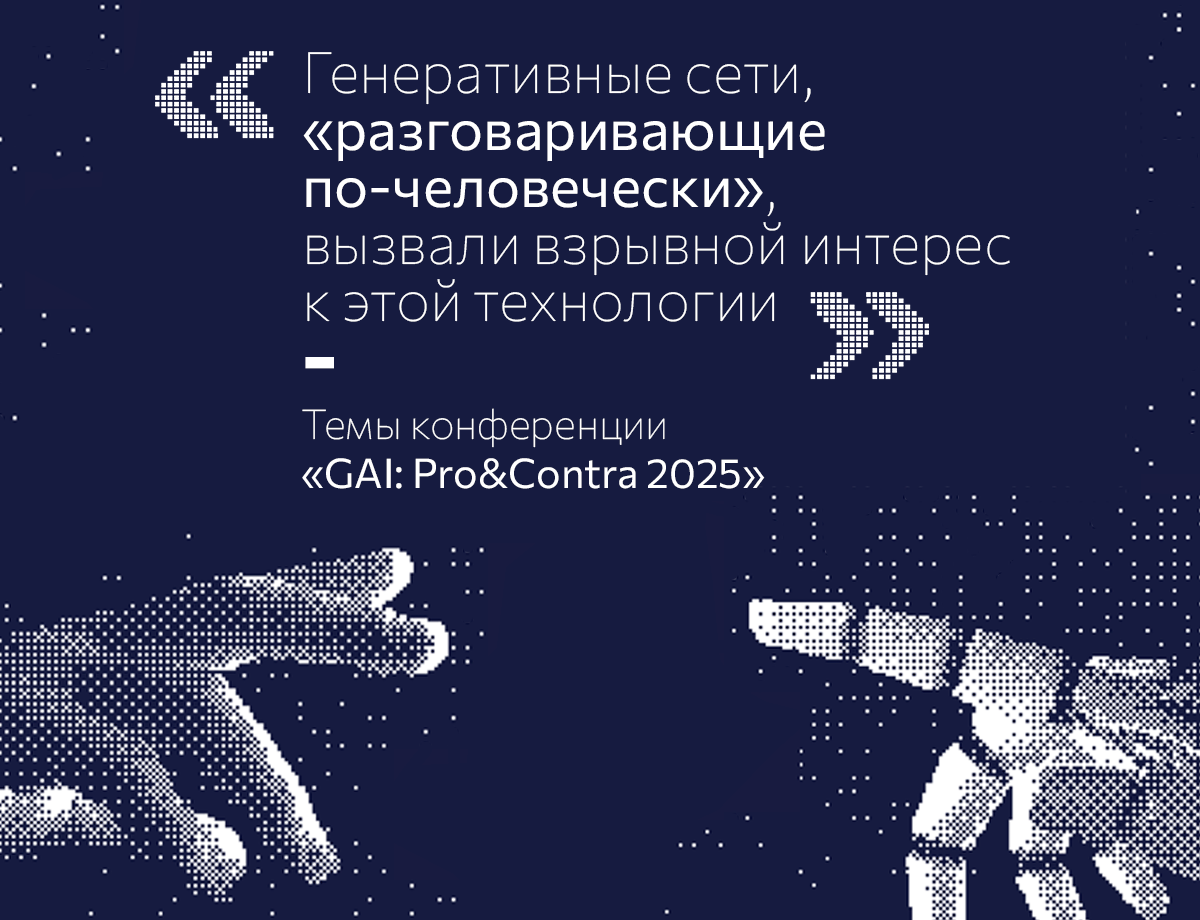
Despite the fact that AI technology has been known for many decades, the recent emergence of generative networks that can "talk like humans" has sparked an explosion of interest in this technology. As a result, almost all issues related to the use of AI in education and science are currently relevant and significant.
However, it is important to highlight the relationship between the use of this technology and the task of fostering traditional values among young people, as well as the analysis of the social consequences of introducing artificial intelligence into education and other human activities.
Equally important are the issues of monitoring the results of education and, in this regard, strengthening the role of live communication between the participants in the educational process. And, of course, we will pay special attention to new opportunities for ensuring interdisciplinarity in education and scientific research.
— How does "GAI: Pro&Contra 2025" differ from similar events?
— The key difference is its comprehensive and integrative nature. It is becoming a unique platform where educators, scientists, and members of the public can simultaneously discuss both the practical aspects of implementing AI technologies in education and science, as well as the challenges of training specialists who can work with these technologies. Special attention is being paid to the ethical and legal aspects of AI applications, as well as the integration of approaches to using neural networks in teaching and research activities.
We believe that this collaborative and comprehensive approach to addressing various issues and opportunities will help identify the most effective ways to incorporate modern technologies into education and science.
Moreover, by its very nature, our Faculty of Teacher Education, which functions as part of the country's main university, which is also a leading scientific organization, fully meets the needs of such an integrative and comprehensive discussion.
— In your opinion, what benefits have generative artificial intelligence technologies brought to your professional sector?
— For several years now, we have been conducting research aimed at identifying those areas of educational activity where the use of generative artificial intelligence technologies can have a significant positive impact. At the same time, we are also recording situations where the use of AI does not affect the effectiveness of the educational process, and sometimes even reduces it. We need this kind of analytics primarily to teach future and current educators to take these features into account and use AI in a conscious and appropriate way.
In practice, there are many examples where generative AI helps educators simply answer difficult but important questions, speeds up the processing of pedagogical experiment data, and so on.
Section "AI in Education". Moderator ➡️ Tatiana Toreeva, Acting Dean of the Faculty of Pedagogical Education at Lomonosov Moscow State University
— Tatiana Alexandrovna, what issues will the participants of the section “Generative AI in Education” discuss?
— The main goal of the section is to determine the methodological approaches, role, and strategic guidelines, as well as the conditions and opportunities for using generative artificial intelligence technologies in education, the educational process in general, secondary vocational, higher, and additional education systems.
Despite the fact that AI technology has been known for many decades, the recent emergence of generative networks that can "talk like humans" has sparked an explosion of interest in this technology. As a result, almost all issues related to the use of AI in education and science are currently relevant and significant.
However, it is important to highlight the relationship between the use of this technology and the task of fostering traditional values among young people, as well as the analysis of the social consequences of introducing artificial intelligence into education and other human activities.
Equally important are the issues of monitoring the results of education and, in this regard, strengthening the role of live communication between the participants in the educational process. And, of course, we will pay special attention to new opportunities for ensuring interdisciplinarity in education and scientific research.
— How does "GAI: Pro&Contra 2025" differ from similar events?
— The key difference is its comprehensive and integrative nature. It is becoming a unique platform where educators, scientists, and members of the public can simultaneously discuss both the practical aspects of implementing AI technologies in education and science, as well as the challenges of training specialists who can work with these technologies. Special attention is being paid to the ethical and legal aspects of AI applications, as well as the integration of approaches to using neural networks in teaching and research activities.
We believe that this collaborative and comprehensive approach to addressing various issues and opportunities will help identify the most effective ways to incorporate modern technologies into education and science.
Moreover, by its very nature, our Faculty of Teacher Education, which functions as part of the country's main university, which is also a leading scientific organization, fully meets the needs of such an integrative and comprehensive discussion.
— In your opinion, what benefits have generative artificial intelligence technologies brought to your professional sector?
— For several years now, we have been conducting research aimed at identifying those areas of educational activity where the use of generative artificial intelligence technologies can have a significant positive impact. At the same time, we are also recording situations where the use of AI does not affect the effectiveness of the educational process, and sometimes even reduces it. We need this kind of analytics primarily to teach future and current educators to take these features into account and use AI in a conscious and appropriate way.
In practice, there are many examples where generative AI helps educators simply answer difficult but important questions, speeds up the processing of pedagogical experiment data, and so on.